December is a good month for oral presentations. Students have a long bank holiday in Spain and not many university exams yet, so they can prepare a short, five-minute presentation about a topic of their choice. This activity takes only three lessons, one to give them encouragement and basic guidelines and two lessons for the presentations themselves, all in all, from 5/ 6:30 hours of classroom time and the results are always impressive.
Some of the words you will find in the Interacative Exercise Key are: to churn, to wring [wet], to spell disaster, to dispel, the flow [of your points], setting, reservations to overcome, the adrenaline rush, to tighten, self-defeating, to discard, time constraints, time slot, to disrupt, an issue, to undermine, to strive [for comfort], a cap with a bill, overly loose clothing, blousy sleeves, smooth, to mar [the flow of speech], to interject, to stare, to scan, to dwell, the prevailing [norm], to avert from [direct eye contact], to pace [back and forth], to sway [to and fro], the culprit, to set up [a display table], a slide show, to enhance [my presentation], to engage [the audience], a rule of thumb, the razzle and dazzle, a back up [plan], a [computer] crashes, a bulb blows, overhead [transparencies].
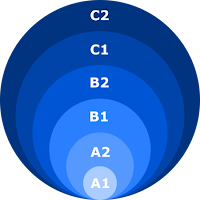
This is a lesson plan based on the Common European Framework of Reference and the European Language Portfolio , which can help students to reflect upon their history as language learners, their goals, beliefs and interests, and to do informal self-assessment of their language level using the Self-Assessment Grid of the CEFR . It can be used the first or the second day of the course, before starting with the textbook, but it can also be used as distance conversation practice in the topic "Languages". The questionnaire is supposed to be for C1 students, but, with minimum changes, it can be adapted for B2 and even C2 learners. Here you can find a link to the Questionnaire "Language Learning Experiences and Beliefs" for conversation practice, again the Self-Assessment Grid of the CEFR and a lesson plan with suggestions for teachers. The less frequent vocabulary includes the following words and expressions: concening, current affairs, delivery, [to be] implied, pred...
Ennio Morricone has died at the age of 91 in Rome. He was the composer of the score of more than 500 films, including successful "spaghetti westerns" like " The Good, the Bad and the Ugly ", " Once Upon a Time in the West " with director Sergio Leone and other box office hits like " Cinema Paradiso ", " The Mission " or Brian de Palma's " The Untouchables ". He won an honorary Oscar in 2007, and an outright one for Quentin Tarantino's film " The Hateful Eight " in 2015. He was recently awarded the 2020 Princess of Asturias Prize for the Arts by the Spanish Crown. He managed to create an atmosphere of mystery, toughness and humour by orchestrating music based on "howls, gunshots and groans". Rose Friedman, writing an appreciation for NPR, says that in Western movies, where dialogue was minimal, "music did the talking". Here you can listen to a 4-minute radio report with its script, an...
In the modern digital world, everybody is talking about algorithms, but what are they exactly? Where can you find them? What can they do? How do they work? Should we be scared of algorithms? Can algorithms think for themselves? What do they look like? Can they do a job better than humans? This 7':53" BBC Ideas video with subtitles explains all about algorithms in a lively and attractive way. It is accessible to B2 students and above. The most difficult words you will find in the video are: algorithm, search engines, dating apps, to be baffled [by science], a riddle, overwhelming, to pick her brains (informal), a set of instuctions, to enable a computer programme [to do something], billions, a server room, a bunch of [blocks] (informal), to be concerned about [something], to drag and drop [blocks], a drone, a flip, a challenge, a hoop, a lap, no offence (informal), to take over the world, to take our jobs, to deskill [humans], dependent upon [them], trusting of [them], on the ...



Comments
Post a Comment